
AI SEO vs Traditional SEO: What Is the Difference?
AI SEO focuses on visibility within AI platforms like ChatGPT and Google AI Overviews, while traditional SEO targets search engine rankings. Learn the key differences, when you need both, and how to adapt your strategy for 2026.
Adam Yong
Founder & Technical SEO Consultant
Last Updated: March 2026
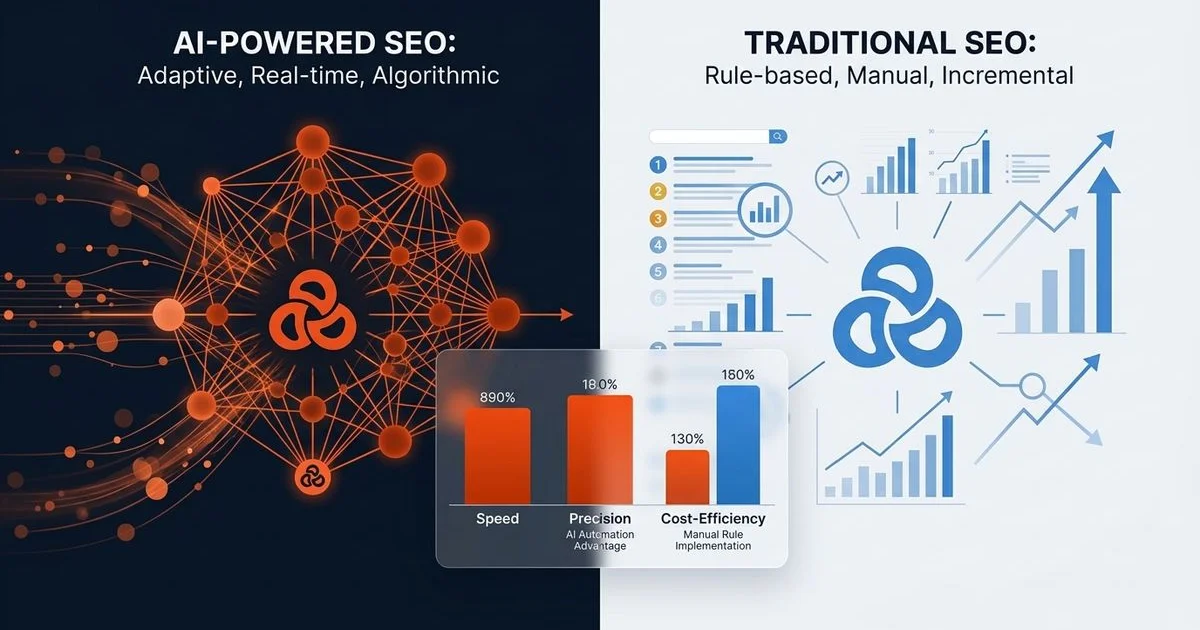
Our team constantly hears the same question from established service businesses across Greater KL and Selangor: AI SEO vs Traditional SEO: What Is the Difference? Traffic patterns are shifting rapidly. The old playbook alone simply fails to deliver the same volume of qualified leads.
We noticed this massive change accelerating when a January 2026 Vodus Research study revealed that 78% of people in Central Malaysia now use AI tools regularly. Consumers ask ChatGPT or Perplexity for local recommendations instead of scrolling through ten blue links. This shift requires a completely different approach to digital visibility.
We always point clients to our pillar guide on What Is AI SEO for a complete introduction to AI-driven optimisation. Let’s break down exactly what has changed and how to build a strategy that captures both traditional and AI-driven traffic. The data proves that adaptation is mandatory.
What Is Traditional SEO?
We define traditional SEO as the practice of optimising your website to rank higher on search engine results pages (SERPs). It remains the absolute foundation of digital marketing. The core mechanics are well established and still drive immense value.
- Keyword research to identify what people search for
- On-page optimisation (title tags, meta descriptions, header tags, content)
- Link building to earn authority from other websites
- Technical SEO (site speed, mobile-friendliness, crawlability)
- Local SEO (Google Business Profile, citations, reviews)
Our experience shows this straightforward model still commands massive attention. A user types a query into Google, views the top links, and clicks the most relevant one. Ranking matters enormously because click-through rates drop sharply after the first few results.
We know traditional search is far from dead, as a December 2025 Forbes report confirms Google’s global search market share remains near 90%. Billions of searches still produce traditional results every single day. This model just happens to share the stage with a new competitor.
What Is AI SEO?
Our definition of AI SEO is the practice of optimising your business to appear in AI-generated responses and recommendations. This rapidly expanding field includes several major platforms. The biggest players are completely changing search behaviour.
- ChatGPT (surpassed 1 billion weekly searches by mid-2025)
- Google AI Overviews (officially displaying sponsored ads in Malaysia as of late 2025)
- Perplexity AI (recently launched a massive publisher revenue-sharing model)
- Microsoft Copilot
- Claude by Anthropic
We see a complete paradigm shift in how these platforms operate. They generate conversational answers and recommend specific businesses instead of showing a list of links. The user never sees a “page one” and instead receives a single curated response.
Our data tracking shows pages cited in AI responses boast a 14.2% conversion rate. That number is 4.4 times higher than standard organic traffic. The trust transfer is enormous when an AI explicitly recommends your business by name to a potential client in Selangor.
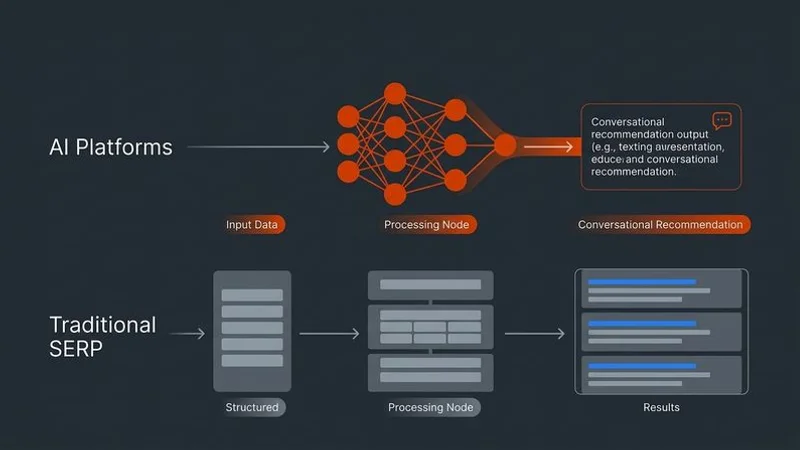
We designed our AI Content Optimisation service to help businesses structure their content specifically for AI citation and recommendation. Proper formatting makes your site easily readable for large language models. This structure is the secret to appearing in those curated answers.
AI SEO vs Traditional SEO: What Is the Difference?
We often use a side-by-side comparison to highlight the distinct focus areas of each approach. The metrics and goals require completely different mindsets. A clear breakdown makes the transition easier to understand.
| Factor | Traditional SEO | AI SEO |
|---|---|---|
| Goal | Rank on SERPs | Get recommended in AI responses |
| Platform | Google, Bing | ChatGPT, AI Overviews, Perplexity |
| User experience | List of links | Conversational answer |
| Content format | Keyword-optimised pages | Entity-rich, structured data |
| Authority signals | Backlinks, domain authority | Citations, entity consistency, reviews |
| Measurement | Rankings, organic traffic | AI mentions, referral traffic, citation rate |
| Update frequency | Monthly or quarterly | 76.4% of cited pages updated within 30 days |
| Local signals | GBP listing, NAP citations | GBP completeness, review sentiment, entity data |
| Technical focus | Site speed, mobile, crawling | Schema markup, structured content, entity clarity |
| Competition | Millions of pages per query | Fewer entities per response (typically 3-5) |
Our biggest takeaway from this comparison is the striking difference in competition density. You compete against every indexed page for a specific query in traditional SEO. Most AI responses only cite or recommend three to five businesses for a local query like “commercial electrician in Petaling Jaya”.
We know getting into that shortlist is significantly harder. The reward makes the effort worthwhile because the conversion intent is exceptionally high. Users who receive a direct recommendation act much faster.
How AI Platforms Choose What to Recommend
We need to understand how AI engines select businesses to succeed in this new environment. The selection process differs fundamentally from how Google ranks standard web pages. Two distinct algorithms are at play here.
Traditional Google Ranking Factors
Our traditional campaigns focus on the hundreds of ranking signals Google uses. The primary elements dictate your position in standard results. These factors are heavily reliant on authority and relevance.
- Content relevance to the search query
- Backlink profile quality and quantity
- Page experience including speed and mobile responsiveness
- Domain authority built consistently over time
AI Recommendation Factors
We see AI platforms weighing entirely different signals to determine credibility. Their priorities focus heavily on structured certainty. An AI must be confident in your details before suggesting you.
- Entity clarity confirming what your business is and where it operates
- Structured data parsing your information cleanly through schema markup
- Consistency ensuring your details match across every database
- Authority signals from trusted directory citations and strong reviews
- Content freshness showing recent updates within the past 30 days
- Sentiment data proving high review quality
We built our Local Entity Management service to focus specifically on establishing the clarity and consistency that AI platforms require. Clean data is the absolute foundation of this strategy. Inconsistent information will immediately disqualify you from AI recommendations.
What Traditional SEO Gets Right (That Still Matters)
We want to be clear that traditional SEO is far from obsolete. Several established practices remain absolutely critical for AI visibility. You cannot abandon the basics just because platforms are evolving.
Technical Foundation
Our audits consistently show that a fast website helps both Google and AI crawlers. No amount of AI optimisation will save a slow or broken site. Technical fundamentals like clean URLs and proper heading hierarchy remain non-negotiable.
Quality Content
We always prioritise genuinely useful content because both traditional algorithms and AI engines reward it. Thin or keyword-stuffed pages fail miserably in both contexts. AI platforms specifically prefer content that directly answers questions rather than fluff designed to keep users clicking.
- Clear definitions of technical terms
- Direct answers to common questions
- Logical heading structures
Local Presence
Our team considers your Google Business Profile the single most impactful asset for local AI visibility. A complete listing drives immense value. WebFX benchmarking data from 2026 reveals that service businesses often see an impressive 10% to 15% click-to-call rate from a well-optimised GBP.
We explain the exact mechanics of this in our GBP Optimisation service guide. Every detail on that profile influences your local ranking. Missing information creates gaps that competitors easily fill.
What Traditional SEO Gets Wrong for AI
We see major disconnects when businesses try to force old habits into new AI models. Several traditional best practices actively work against your AI visibility. A strategic pivot is required to avoid these pitfalls.
Keyword Density Over Entity Clarity
Our strategists used to focus heavily on exact-match keywords. AI platforms care exclusively about entities, which are clearly defined business concepts with specific attributes. Repeating “best accountant in KL” ten times does nothing, whereas clearly defining your services and service areas builds true entity authority.
Link Building Over Citation Building
We acknowledge that backlinks still matter immensely for standard Google rankings. AI platforms place much more weight on consistent citations across authoritative directories and industry databases. A handful of high-quality directory listings with perfect NAP data often outperforms hundreds of random backlinks for AI visibility.
Content Silos Over Structured Answers
We still use pillar-cluster models for traditional campaigns. AI platforms require direct, highly structured answers they can easily parse and cite. Specific formatting yields far better results in AI contexts.
- Adding FAQ schema markup
- Using explicit question and answer formats
- Creating clear comparison tables
The Data: Why You Cannot Ignore AI SEO in 2026
We track these metrics closely to ensure our clients stay ahead of the curve. The numbers tell a compelling story about consumer behaviour. Adoption rates are moving much faster than previous technological shifts.
- 14.2% conversion rate from AI-referred traffic
- 4.4x higher engagement from AI referral traffic compared to traditional organic clicks
- 22-40% visibility improvement for businesses with an optimised AI presence
- 76.4% of cited pages in AI responses were updated within the past 30 days
- Semrush data from 2026 confirms every 10 new reviews increases local GBP conversion rates by 2.8%
We know these are current measurements rather than future projections. Malaysian service businesses that ignore this shift are leaving significant revenue on the table. Early adoption secures an undeniable competitive advantage.
We compiled the full data picture in our AI SEO Statistics 2026 report. The trends clearly point to increased AI integration across all search engines. Your marketing budget needs to reflect this reality.
Do You Need Both? (Yes, Here Is Why)
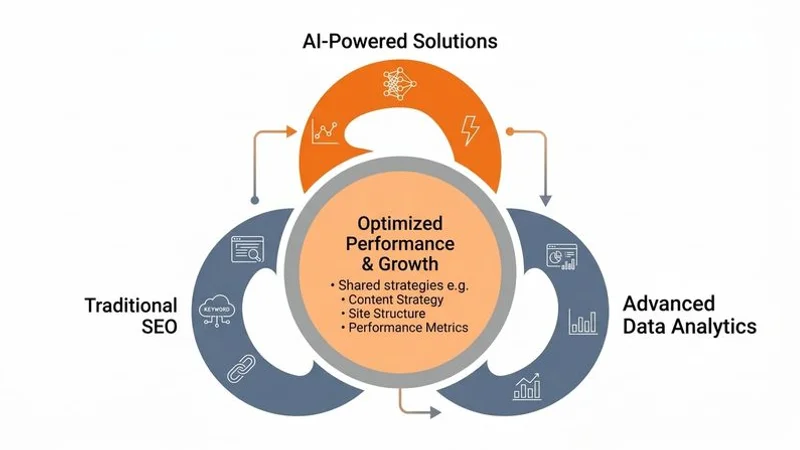
We frequently get asked if a business can simply abandon traditional SEO for AI SEO. The answer is no, because you need both channels with different areas of emphasis depending on your industry. Each method captures a different stage of the buying journey.
When Traditional SEO Still Dominates
Our data shows traditional search excels in several specific scenarios. People still rely heavily on standard Google results for certain tasks. These specific use cases continue to drive massive organic traffic.
- E-commerce product searches for visual browsing
- Informational queries requiring long-form research
- Highly competitive markets with established leaders
We also see traditional SEO holding strong due to established domain authority. This authority provides a strong defensive moat. Displacing a twenty-year-old brand on standard results takes time.
When AI SEO Is More Critical
We see AI dominating the local service sector. Consumer behaviour has shifted dramatically for certain business types. AI recommendations carry enormous trust for these specific industries.
- Local service businesses (plumbers, electricians, roofers)
- Professional services (lawyers, dentists, accountants)
- Reputation-dependent businesses relying on social proof
We strongly advise most Malaysian SMEs to dedicate at least 30% to 40% of their search budget to AI SEO services in Malaysia. Reputation-dependent businesses must pay especially close attention to this shift. This proportion will inevitably grow as platforms evolve.
How to Build a Combined Strategy
We developed a practical framework to help established businesses combine both approaches effectively. This step-by-step process eliminates the guesswork. Following these phases ensures you cover all critical bases.
Step 1: Audit Both Channels
We always start with a traditional SEO audit to spot technical issues and content gaps. You must pair this with an AI Visibility Audit to understand exactly where you currently stand in AI recommendations. A baseline measurement is essential before making changes.
Step 2: Fix Your Entity Foundation
Our top priority is ensuring your business information is perfectly consistent across every platform. This single action improves both traditional and AI SEO simultaneously. The Review & Citation Building service handles this exact process systematically.
Step 3: Optimise Content for Both
We structure content to rank in traditional search while remaining easily citable by AI platforms. Specific formatting rules make your data accessible. You must implement these technical adjustments across your site.
- Use clear H2 and H3 headings formatted as common questions
- Provide direct answers in the first paragraph of each section
- Add FAQ schema markup to key pages
- Keep content fresh by updating it at least monthly
We also mandate verifying these updates frequently. This code speaks directly to search engines. Stale information loses AI visibility quickly.
Step 4: Track Both Channels
We set up proper tracking for both traditional organic traffic and AI referral traffic in GA4. You simply cannot optimise what you do not measure. Read the comprehensive guide on tracking AI referral traffic in GA4 to see the setup process.
Step 5: Invest in Reviews and Citations
Our final step focuses on the fact that reviews now serve double duty. They help your local map pack rankings while heavily influencing AI recommendations. A strong, active review profile is the highest-ROI activity for businesses pursuing both channels today.
Common Misconceptions
We constantly hear a few persistent myths that hold businesses back. Clearing these up is essential for a successful strategy. False assumptions lead to wasted marketing spend.
Myth: AI SEO Will Replace Traditional SEO Entirely
We know this idea is completely false. Traditional search still handles the vast majority of commercial queries. The two systems will coexist and serve different user intents for the foreseeable future.
Myth: Ranking First on Google Guarantees AI Recommendations
We see many businesses assume that top Google spots automatically transfer to AI tools. This is dangerous thinking because AI systems use entirely different signals. Sites lacking entity clarity and structured data remain invisible to AI, regardless of their Google rank.
Myth: AI SEO Is Just Schema Markup
We stress that viewing AI SEO purely as schema markup is a massive oversimplification. This holistic discipline encompasses several critical components. A complete strategy requires much more than a single technical trick.
- Entity management and consistency
- Content structure and formatting
- Review generation strategy
- Ongoing citation building
Next Steps
We want you to take immediate action to secure your digital presence for the future. The landscape is shifting fast. Early adopters will capture the most market share.
- Check your AI visibility: Ask ChatGPT to recommend a business in your specific category and area. Are you mentioned in the response? Read the step-by-step guide to checking AI visibility.
- Get a professional audit: An AI Visibility Audit gives you a clear, actionable picture of where you stand and what needs fixing.
- Start with your GBP: A fully optimised Google Business Profile provides the absolute fastest win for both traditional and AI SEO.
We know the businesses that act now will build a massive first-mover advantage. AI platforms are currently forming their foundational understanding of Malaysian local businesses. The window to establish your entity authority is wide open right now.
Conclusion
We encourage you to reach out if you need guidance. Stop guessing and start building a future-proof plan.
Understanding AI SEO vs Traditional SEO: What Is the Difference? is just the beginning. We stand ready to help you implement these critical changes.
The team at Contact AI SEO Malaysia offers a free initial consultation to build your combined strategy.